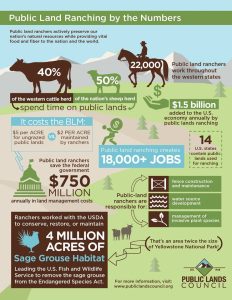
Public Land Ranching by the Numbers
Public land ranching is a significant part of the western U.S. economy and land stewardship. Some 22,000 ranchers operate across western states, with 40% of the western cattle herd and 50% of the nation’s sheep herd spending time on public lands. Collectively, public lands ranching adds $1.5 billion to the U.S. economy annually and supports more than 18,000 jobs across 14 states.
Ranchers also reduce federal land management costs. BLM-managed lands cost $5 per acre when ungrazed, compared to $2 per acre when maintained by ranchers saving the federal government an estimated $750 million annually in land management expenses.
Beyond economics, public-land ranchers contribute directly to conservation by maintaining fence infrastructure, developing water sources, and managing invasive plant species. Working with the USDA, ranchers helped conserve, restore, or maintain 4 million acres of sage grouse habitat, an area twice the size of Yellowstone National Park, which contributed to the U.S. Fish and Wildlife Service removing the sage grouse from the Endangered Species Act.
See infographic here: